

































Citizenship-by-Investment: Top Islands for High Yields and Tax Benefits
Island nations offering Citizenship-by-Investment (CBI) provide investors with a second passport, tax advantages, and potential property returns. These programs attract global investors seeking financial flexibility, business expansion, and mobility.

1. What is Citizenship-by-Investment (CBI) and why consider it

CBI means acquiring citizenship of a country by making a qualifying investment (for example in real estate, donation, business investment) rather than by long-term residency or natural descent.
For many high net worth individuals (HNWIs) it provides:
a “Plan B” citizenship/second passport (mobility, security)
access to tax-beneficial jurisdictions (depending on structure)
an investment in real estate or approved projects.
Key considerations: cost of investment + due diligence + tax implications + lifestyle/commitment.
Tax matters are often a major part of the value proposition (or a critical risk) in CBI decisions.
2. How islands stack up for tax efficiency and yields
Several island jurisdictions combine CBI with favourable tax regimes. Key points:
Many Caribbean islands follow a territorial tax system: income earned outside the country is often not taxed locally.
Some jurisdictions explicitly have no personal income tax, no capital gains tax, no inheritance/wealth taxes for non-resident citizens.
Real estate investment (via CBI) can yield rental income, capital appreciation in desirable island markets there is increasing demand for holiday/vacation-rental stock.
That said: “high yields” are not guaranteed – market risk, local governance, regulatory changes matter.
The global regulatory environment is tightening (for example: enhanced due diligence, tougher AML rules) – so tax & legal planning becomes essential.
3. Top islands offering CBI + favourable tax regime
Here are some of the standout island jurisdictions as of latest data:
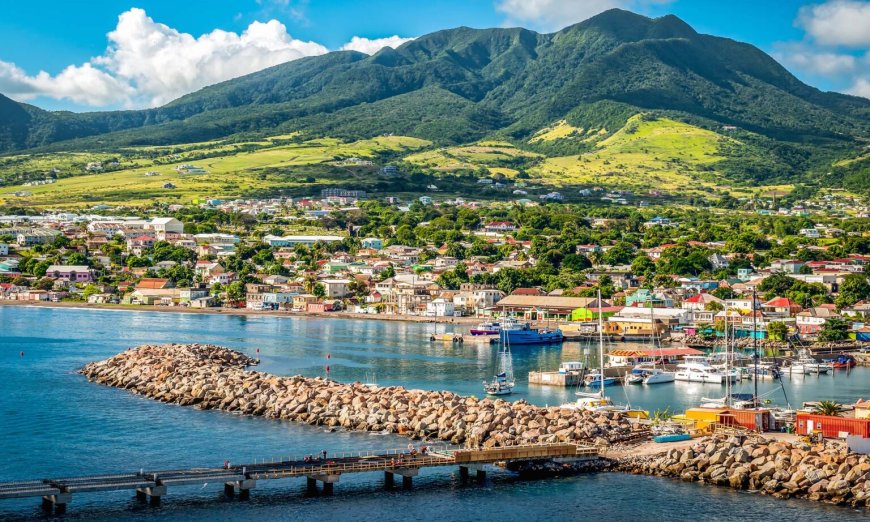
a) St. Kitts & Nevis
Its CBI programme is one of the longest running.
Tax benefits: no personal income tax (for non-residents), no capital gains tax, no inheritance tax, minimal withholding in certain cases.
Typical investment: donation into Sustainable Growth Fund or approved real-estate investment.
Mobility: Passport offers visa-free or visa-on-arrival access to over 150 destinations.
Tax yield perspective: As an investor-citizen you can structure to hold assets outside St Kitts & Nevis so that local taxation is minimal, depending on your domicile/residency.
b) Antigua & Barbuda
One of the more affordable CBI programmes in the Caribbean.
Tax environment: No personal income tax, no capital gains tax, no wealth tax for tax residents.
Real-estate + donation options: Provide routes to citizenship; the minimum investment thresholds are rising.
Important: keep track of changes thresholds may increase (see below).
c) Grenada
The CBI programme offers citizenship via donation or real-estate investment.
Tax benefits: For citizens living abroad, no tax on overseas-sourced income, no capital gains tax, no inheritance tax.
Real-estate routes are increasing in popularity; yields from vacation rental markets in Caribbean islands are rising in many cases.
d) St. Lucia
Offers CBI via investment into approved real estate or donation.
Tax system: Residents taxed only on income sourced in St Lucia (territorial system), non-resident citizens can pay minimal / no tax on worldwide income. No wealth or inheritance tax.
For an investor looking for mobility + favourable tax, this is a viable option.
e) Vanuatu (Pacific)
Less discussed than the Caribbean but offers CBI + very favourable tax regime.
Tax: No personal income tax, no capital gains tax, no inheritance tax (on foreign-source income when resident).
Citizenship via investment (often donation) available; minimal residency requirement.
Important: As it is more niche, legal/tax due diligence is especially critical.
4. Key investment thresholds & changes (latest)
The minimum investment amounts for many programmes are increasing. For example: From 1 July 2024 several Caribbean CBI programmes raised the donation path minimum to US$200,000.
Real-estate routes often require higher amounts (e.g., US$300,000+ or even US$400,000 depending on jurisdiction) and sometimes holding periods.
Investors must account not only for the investment amount but also due diligence fees, government fees, legal/agent costs.
Note also potential tax residence/residency requirements: some jurisdictions may stipulate number of days of stay to benefit from full tax advantages.
5. Tax-benefit mechanics and what to watch
Getting citizenship is one step; structuring your tax residence is another. Simply having the passport doesn’t guarantee zero tax on worldwide income unless you satisfy the local rules (tax residence, source of income, local law).
Major tax benefits often derive from not being resident in the CBI country, or having income earned outside that country so the territorial tax system kicks in. (Example: St Kitts & Nevis).
Even in “zero tax” jurisdictions you may still face tax in your home country or other countries where your income is sourced. Full international tax planning is essential.
Regulatory risk: International bodies are increasing scrutiny of CBI programmes and tax-haven regimes. For example, list of high-risk jurisdictions, information exchange rules via OECD’s Common Reporting Standard (CRS) apply.
Real-estate markets: Yield depends on local tourism demand, property management, maintenance, local regulations (foreign ownership, leasehold vs freehold).
Liquidity risk: Real-estate in smaller island markets may have limited buyers when you choose to exit; this affects “yield + resale” calculus.
6. Practical benefits & yield-related factors
Global mobility: Many island CBI passports allow visa-free or visa-on-arrival travel to 140+ countries. For example: Caribbean CBI programmes noted for up to ~150 countries.
Tax optimisation: If structured well – foreign-source income, capital gains and inheritance may be taxed lightly or not at all in the CBI jurisdiction.
Real-estate yield: With rising interest from global investors, rental yields (especially vacation rentals) in Caribbean islands can be attractive; plus capital appreciation potential if tourism and infrastructure improve. (Anecdotal evidence exists).
Diversification: Having citizenship + assets in a different jurisdiction provides a hedge against domestic political/tax/regulatory risks in your home country.
7. Risks and limitations
Program changes: Governments can alter rules, raise thresholds, change benefits (as many already did). For example: donation minimums increasing.
Tax law changes: Both in the island jurisdiction and in the investor’s home/residence country. A benefit today may be challenged tomorrow.
Diligence and reputation risk: CBI programmes have come under international criticism (money-laundering, security risks). Due-diligence is stricter now.
Real-estate risk: Islands can be more volatile in property value; supply/demand, natural disasters, tourism downturns all matter.
Exit/liquidity risk: Selling an investment in a remote island may take time.
Home-country tax: Your existing citizenship and tax residence may require you to declare/ pay taxes regardless of your second jurisdiction’s tax stance.
8. Latest updates worth noting
The Caribbean CBI group (several partner islands) signed a Memorandum of Understanding (MoU) in March 2024 to cooperate on pricing, transparency, and regulation.
Investment thresholds for donation paths across Caribbean CBI programmes are already rising (to at least US$200,000) and real-estate paths may follow.
More jurisdictions outside the Caribbean (e.g., Vanuatu in the Pacific) are gaining attention for CBI + favourable tax.
Tax-haven discussions globally are increasing, and more countries are tightening rules around offshore tax regimes, information exchange, substance requirements. This affects the “tax benefit” side of the equation.
9. Summary & decision-making checklist
In summary: island jurisdictions offering CBI + favourable tax regimes can provide high potential yields (mobility + tax optimisation + real-estate investment), but the outcome depends heavily on your personal structure, investment route, tax residence, timing and risk management.
Here’s a checklist to run through if you’re considering this:
Confirm current investment thresholds (programme may have increased).
Understand the tax residence rules of the jurisdiction and how they apply to you (days of stay, source of income, etc).
Map your global tax footprint: home country + other sources of income + potential tax liabilities.
Review the real-estate market in the island: demand, rental yields, exit strategy, legal ownership rights.
Conduct thorough due-diligence: programme reputation, agent/ intermediary credibility, regulatory changes.
Consider exit scenarios: what happens if you decide to sell, what value will you have, what tax/fees will apply.
Monitor regulatory & compliance risks: anti-money-laundering laws, global information exchange regimes, changes in citizenship programmes.
Ensure your citizenship/second-passport decision aligns with your broader lifestyle, business, family-planning and estate-planning goals, not just the tax/return angle.
What's Your Reaction?
 Like
0
Like
0
 Dislike
0
Dislike
0
 Love
0
Love
0
 Funny
0
Funny
0
 Angry
0
Angry
0
 Sad
0
Sad
0
 Wow
0
Wow
0